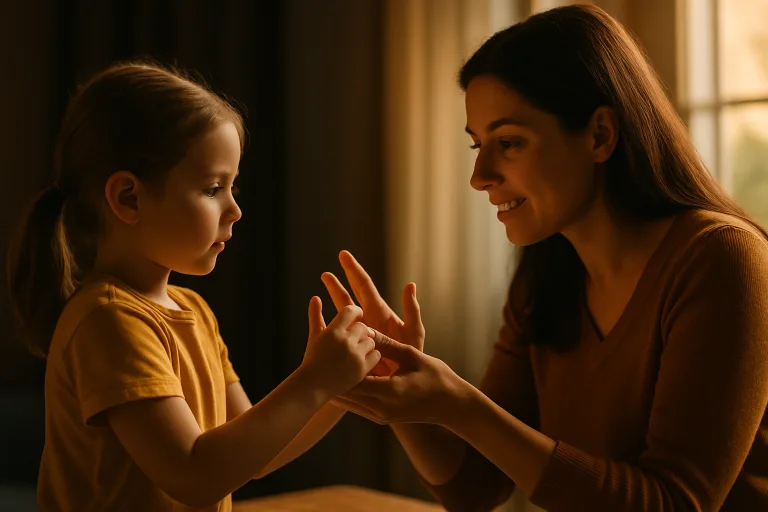
Inclusive Education and Support for Children with Hearing Impairments in Dolinsk, Russia
Introduction
Inclusive education is about giving every child — including those with hearing impairments — equal opportunities to learn, grow and participate in community life. In Dolinsk (Долинск), Sakhalin Oblast, families, teachers and local services can work together to create supportive school environments, effective rehabilitation pathways, and smooth social adaptation for children with special needs.
Legal and institutional framework (Russia)
— Federal Law «On Education in the Russian Federation» (№273-FZ) guarantees access to education for children with disabilities and supports inclusive approaches.
— Children with significant disabilities can be issued an Individual Program of Rehabilitation and Habilitation (Индивидуальная программа реабилитации и абилитации — ИПРА), which helps coordinate medical, educational and social services.
— Local education authorities (municipal departments and the Sakhalin Oblast Ministry of Education) are responsible for implementing inclusive policies and providing resources.
Local support pathways in Dolinsk
— Start with the municipal Department of Education (муниципальный отдел образования): they coordinate school placements, special services and possible funding for assistive equipment.
— Contact health and rehabilitation services: audiologists, ENT specialists and speech therapists (логопед) in Dolinsk or nearby Yuzhno-Sakhalinsk for diagnosis, hearing aid fitting and follow-up.
— National and regional organizations: the All‑Russian Society of the Deaf (Всероссийское общество глухих) and similar NGOs often have regional branches or can point families to local support groups and legal advice.
— Social services (territorial centers) can advise about benefits, transport support and social integration programs for children with disabilities.
Practical guidance for parents
— Obtain a comprehensive audiological assessment early and follow medical recommendations (hearing aids, FM systems, or cochlear implant pathways where appropriate).
— Apply for an IPR/ИПРА if applicable — it formalizes required rehabilitation and educational adjustments.
— Choose or negotiate an educational setting: mainstream school with accommodations, inclusive classroom, or specialized support classes depending on your child’s needs.
— Build a team: pediatrician, audiologist, speech therapist/logopedist, surdopedagog (specialist in deaf education), psychologist and teacher.
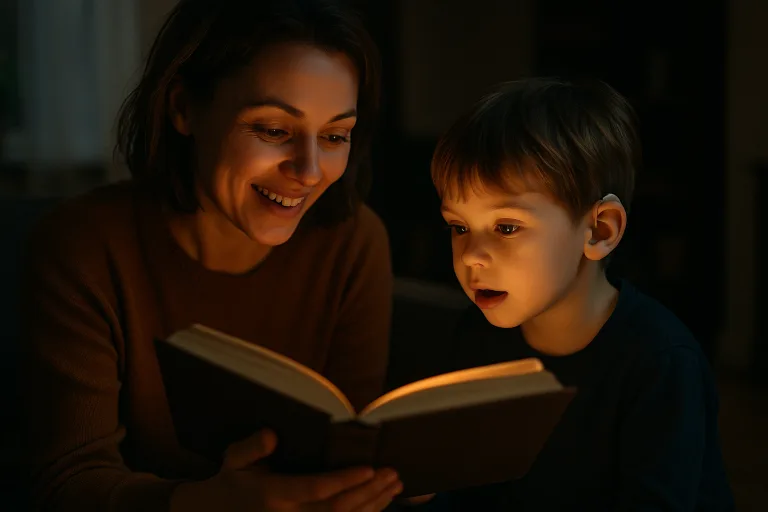
— Encourage language development daily: visual cues, clear speech, sign language (if used), and interactive reading and play.
— Connect with other parents in Dolinsk or Sakhalin Oblast for practical tips, shared experiences and mutual support.
Recommendations for teachers and schools
— Collaborate with parents and specialists to create a personalized education plan (similar to an IEP) including measurable goals.
— Classroom accommodations:
— Preferential seating (near the teacher, away from noise sources).
— Use of visual supports: written instructions, pictograms, captions on videos.
— Reduce background noise where possible; carpet, curtains and door seals help.
— Use a microphone/FM system if available for children with hearing aids.
— Teaching strategies:
— Speak clearly, face the child, and use gestures and visual prompts.
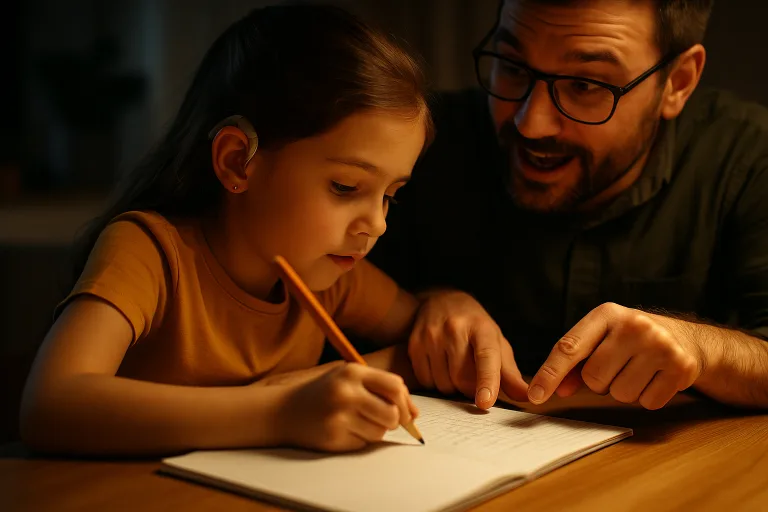
— Break tasks into small steps; check understanding frequently.
— Use multimodal instruction (visual + auditory + kinesthetic).
— Pair the child with a peer-buddy for academic and social support.
— Professional development: teachers benefit from training in surdopedagogy, universal design for learning (UDL) and classroom acoustic management.
Assistive technologies and rehabilitation services
— Hearing devices: hearing aids, bone-conduction devices, cochlear implants (where indicated).
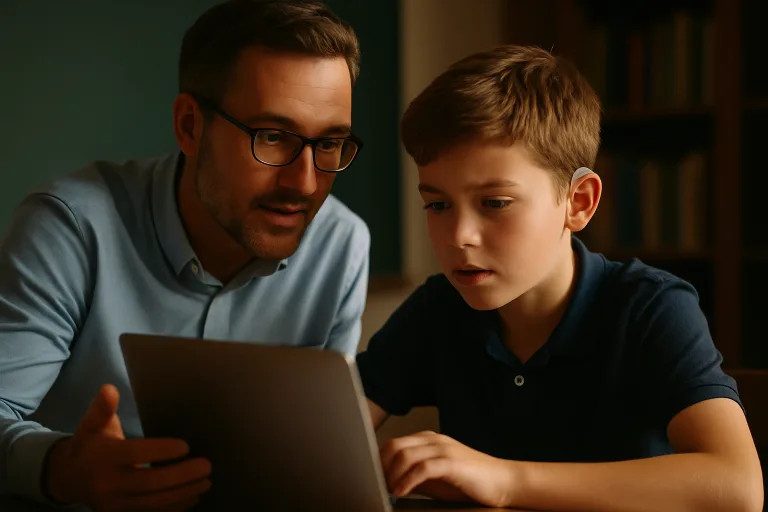
— Classroom tech: FM/DM systems, captioned media, tablets with educational apps, and visual alerting systems.
— Rehabilitation: regular auditory-verbal therapy, speech therapy, and sessions with a surdopedagog for educational adaptation.
— Remote options: teletherapy and online consultations can supplement scarce local services, especially in smaller towns.
Social adaptation and extracurricular inclusion
— Encourage inclusive extracurriculars: sports, art classes, music therapy (with adaptations), drama and local clubs.
— Structured social skills groups help children practice peer interaction in a supportive setting.
— Community events: schools and municipal centers can organize inclusive festivals and awareness days to build understanding.
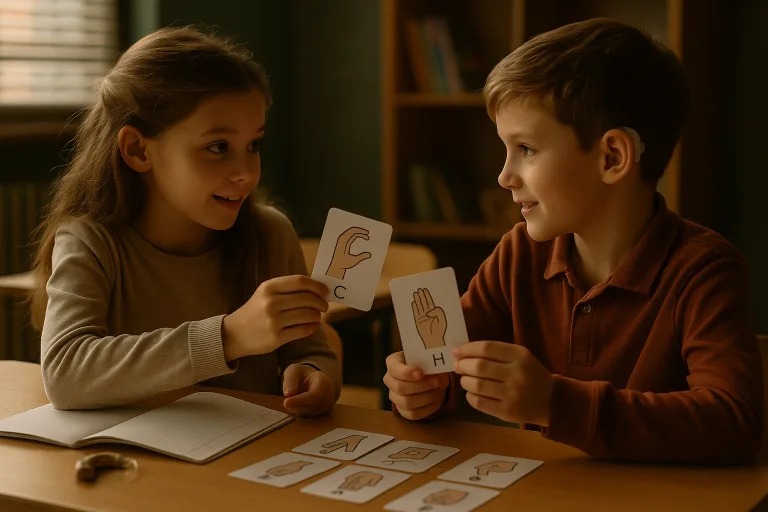
— Promote use of sign language where appropriate, and teach classmates basic signs to facilitate communication and inclusion.
Building community and advocacy in Dolinsk
— Form or join a local parent group to share information, coordinate advocacy and invite specialists to town.
— Work with municipal authorities to prioritize school accessibility: acoustic improvements, training for staff, and procurement of assistive devices.
— Use regional resources (Sakhalin Oblast Ministry, NGOs) to request programs, subsidies or visiting specialists.
Quick checklist for families beginning the process
— Get a full audiological and developmental assessment.
— Apply for any relevant social and educational support documents (ИПРА, disability-related benefits).
— Meet with school administrators and teachers to discuss placement and accommodations.
— Assemble a multidisciplinary support team.
— Explore peer and parent support networks in Dolinsk and Sakhalin Oblast.
Conclusion
Inclusive education for children with hearing impairments in Dolinsk is achievable through early diagnosis, coordinated rehabilitation, classroom adaptations and strong cooperation between families, teachers and local services. Small practical changes — better acoustics, visual supports, trained staff and community awareness — make a big difference in a child’s learning and social life. If you are a parent, teacher or local organizer, start conversations today with the municipal education department and local health services to map the best path forward for every child.