Inclusive Education and Support for Children with Hearing Impairments in Dolinsk, Russia
Inclusive Education and Support for Children with Hearing Impairments in Dolinsk, Russia
Children with hearing impairments have the same right to quality education, social inclusion, and personal development as their peers. In Dolinsk and the wider Sakhalin region, parents, teachers, and local authorities can work together to create supportive learning environments that promote communication, independence, and wellbeing.
Key principles
— Emphasize early diagnosis and timely medical/rehabilitative intervention.
— Build an individualized education plan based on each child’s needs and strengths.
— Combine medical, pedagogical and social support—teamwork between audiologists, speech therapists, teachers and families.
— Promote accessible classrooms and whole-school inclusion rather than segregation where possible.
— Support social adaptation through peer education and extracurricular engagement.
Early diagnosis and medical support
— Arrange audiological testing as soon as a hearing concern is suspected. Early identification improves language outcomes.
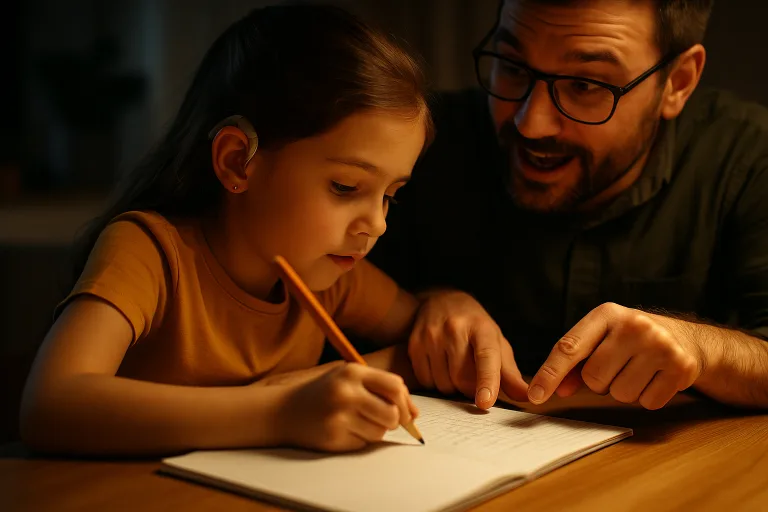
— Seek advice on hearing aids, cochlear implants, and technical maintenance from regional clinics or ENT specialists.
— Coordinate regular follow-ups with audiologists and speech-language pathologists (логопед).
— Explore state programs and subsidies that can help cover devices, batteries, and rehabilitation services.
Educational pathways in Dolinsk
— Inclusive mainstream classrooms with accommodations (preferred when the environment and support are available).
— Specialized groups or schools for children with hearing impairments when individual needs require concentrated support.
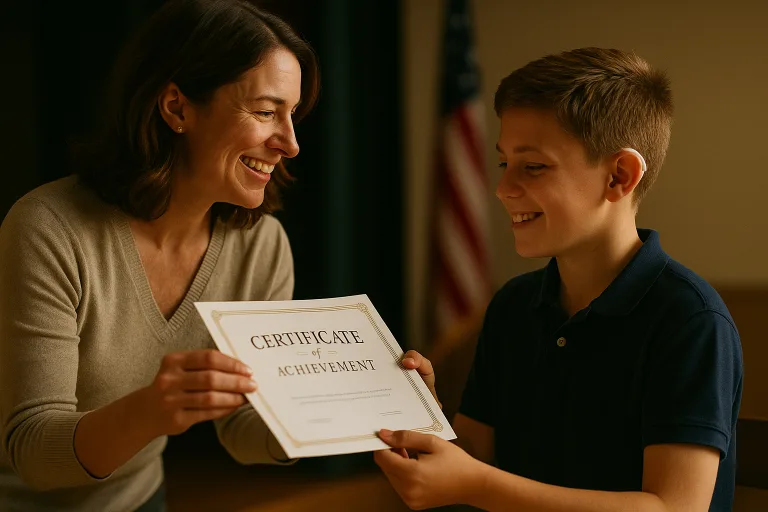
— Individualized Education Plan (IEP) or an equivalent personalized support plan should be developed with parents, teachers and specialists.
— Involve a multidisciplinary team: special educator, speech therapist, psychologist, audiologist and classroom teacher.
Practical classroom strategies for teachers
— Seat the child near the front and on the side that optimizes access to visual cues.
— Minimize background noise: close doors/windows, use carpets and soft furnishings where possible.
— Use clear, face-forward speech; complement spoken language with gestures, visuals and written key words.
— Provide visual supports: diagrams, text summaries, picture schedules, and written instructions.
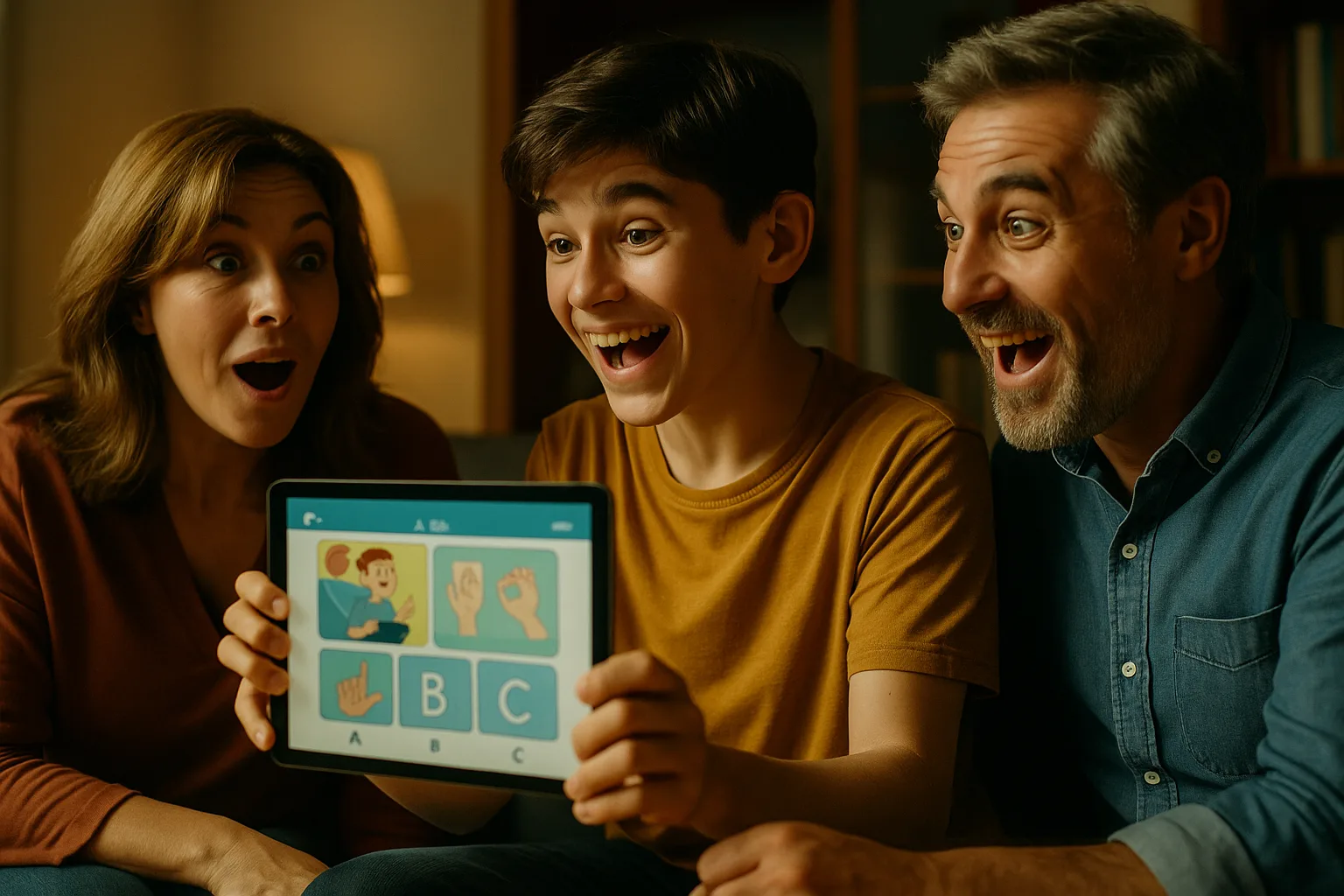
— Use assistive technologies: FM/DM systems, personal amplification, captioned videos and tablets with educational apps.
— Check comprehension regularly and allow extra processing time.
— Encourage cooperative learning and use a “peer buddy” for note-taking and social support.
— Adapt assessment methods—allow oral, visual or practical demonstration of mastery as appropriate.
Support for parents
— Learn basic communication strategies: visual cues, clear articulation, and checking understanding.
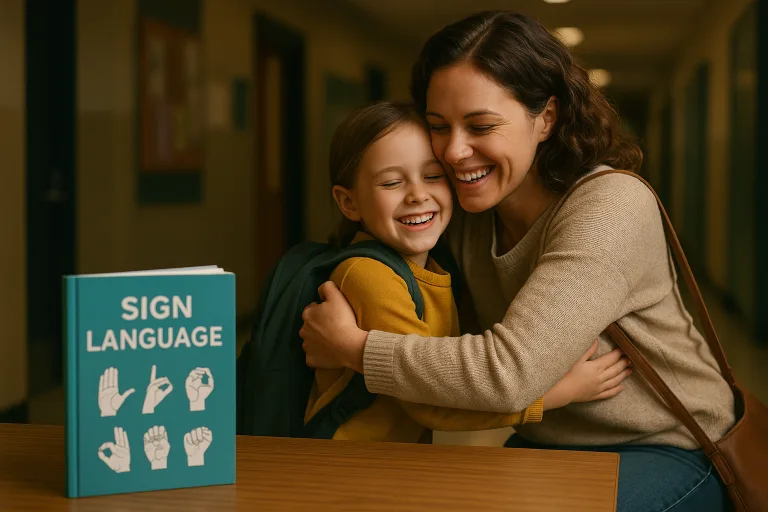
— Consider learning basic sign language (or local sign systems) to expand communication options.
— Join parent support groups to share experiences, practical tips and emotional support.
— Request and participate actively in IEP meetings; bring observations from home and ask for clear, trackable goals.
— Ask about state benefits, social services and reimbursement programs available for children with disabilities.
— Prioritize the child’s social life: organize playdates, encourage participation in clubs and sports adapted as needed.
Social adaptation and peer inclusion
— Educate classmates about hearing differences in an age-appropriate way to build empathy and reduce stigma.
— Create structured social skills groups or buddy systems to practice interaction and conflict resolution.
— Encourage participation in extracurricular activities (music with adapted approaches, theater, crafts, sports) to build confidence.
— Facilitate transition planning for key moments: kindergarten → school, grade changes, and moving to secondary education.
Teacher training and school-wide measures
— Provide regular professional development on inclusive methods, classroom acoustics, and assistive technologies.
— Develop whole-school policies for inclusive education and reasonable accommodations.
— Coordinate with regional specialists for consultations and classroom observation.
— Maintain open communication channels between teachers, specialists and families.
Local starting points in Dolinsk
— Contact Dolinsk city education department (городской отдел образования города Долинска) to discuss school placement, available services and IEP procedures.
— Reach out to the Dolinsk social protection office (управление социальной защиты) for information about benefits and support programs for families.
— Consult regional medical and rehabilitation centers in Sakhalin Oblast (for example, clinics or regional audiology services in Yuzhno‑Sakhalinsk) for diagnostics, device fitting and therapy referrals.
— Connect with national organizations such as the All‑Russian Society of the Deaf (Всероссийское общество глухих) for resources, advocacy and community networks.
— Ask local schools about available assistive technologies, sign-language lessons, and partnerships with specialists.
Practical checklist for parents and teachers
— Get an audiological assessment and follow-up plan.
— Establish an IEP with measurable goals and a review schedule.
— Arrange regular speech therapy and, if needed, technical rehabilitation.
— Implement classroom accommodations (seating, visuals, assistive tech).
— Ensure teachers receive guidance or training on hearing impairment.
— Promote peer education and social inclusion activities.
— Keep records of progress and communicate frequently among stakeholders.
Conclusion
Creating an inclusive, supportive environment for children with hearing impairments in Dolinsk is a collaborative effort. With early intervention, targeted educational strategies, family engagement, and coordinated local support, children can achieve strong academic outcomes and healthy social development. Start by contacting local education and social services, assemble a multidisciplinary team,